
Square Plate RFQs: Map the Artwork Boundary
If a supplier offers printing for the selected square paper plate, request its artwork-placement template before defining the design scope. Ask it to distinguish the flat panel, raised border and corner regions, and to identify any placement limits it proposes. Connect the template, artwork and sample or proof to the same offered plate version.
A wholesale square paper plates inquiry can describe a desired graphic while leaving its intended location unclear. A category photograph identifies a general shape, but it does not establish a printable area or the process offered for an order. A model-specific template request gives the buyer and supplier a common reference for discussing a proposed printed design.
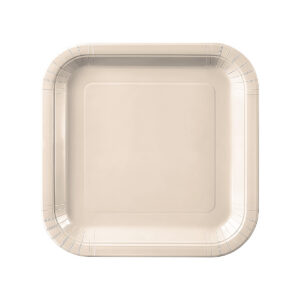
Official square paper-plate category reference. Request the supplier template if printing is offered for the selected item.
Confirm the exact square-plate print offer
The supplier catalogue includes a square paper-plate category image with rounded-looking corners and a raised border. Use it as a category reference and ask the supplier which actual item it proposes for the inquiry. Keep the item identifier visible when discussing artwork so that a design request is not applied to an unspecified plate from the same family.
Ask whether the supplier offers printing for that selected version and what scope it proposes. Retain the reply with the quotation rather than treating the category photograph as a custom-printing commitment. If a different item is suggested for the requested design, give that alternative its own reference and discuss the related template separately.
Request the supplier placement template
For the proposed printing offer, ask for a template or marked drawing that identifies the areas relevant to artwork placement. Request the supplier explanation of the flat panel, border and corner regions rather than deriving those boundaries from shading or visible folds in the photograph. The supplier document should identify the plate version it represents.
Ask which lines or zones are references for the buyer artwork and which limits the supplier proposes for its offered process. Keep the legend with the file so that a line is not mistaken for a cut, fold or print boundary without explanation. The buyer request is for a usable supplier reference, not an invented production drawing based on the catalogue image.
Buying field
Requested supplier response
Offered plate
Supplier square-plate identifier and confirmation of the proposed printing scope.
Template identity
Applicable placement drawing or file, with a revision or other clear identifier.
Area definitions
Supplier-marked flat panel, border and corner regions relevant to the offer.
Artwork orientation
The reference direction used to position the proposed design.
Placement limits
Supplier-defined areas or restrictions, with the meaning of each marked zone explained.
Proof relationship
Artwork version, template revision and identified sample or proof reviewed together.
Separate round paper-plate catalogue product. Its placement areas do not define the square-plate template.
Keep orientation and corner questions specific
Ask the supplier to show how the proposed design is oriented on the template. A square outline can make a rotated artwork look superficially familiar while changing the intended presentation. Use a clear reference direction in the discussion and ask the supplier to connect it to the proof. This makes later placement comments easier to describe against the same document.
The round plate above is another catalogue product, not the square template or part of a declared mixed pack. Do not transfer its design zones to the square offer. If the buyer is comparing shapes, request separate template references for each one. A similar decorative concept does not establish the same available placement area around a different border or corner shape.
Review the proposed artwork against defined areas
Send the supplier an identified artwork version and ask it to show the placement it proposes using its applicable template. If a design element reaches a border or corner region, request a clear answer about the offered scope at that location. Keep the response tied to the marked region rather than accepting an unexplained statement that the artwork fits.
If the supplier proposes a change, ask it to identify the affected design element and provide the revised placement reference. Preserve the relationship between the original request and the offered alternative until a version is agreed. Avoid filling a missing supplier answer with an assumed margin, corner radius or process capability; obtain the relevant offered limit from the supplier.
Separate oval paper-plate category reference. This is not the square sample or evidence of the same artwork boundary.
Align the accepted template, proof and order
The oval plate above is a separate category reference. It is not the square sample and does not define a square-plate print boundary. Keep each offered item and its artwork-placement record distinct. If another plate shape is proposed, request its own template so that the buyer can assess that actual alternative against the intended design.
Before accepting the square-plate print offer, compare the item identifier, template revision and artwork version with the identified sample or proof. Retain the supplier answers to any placement questions with the accepted record. For a repeat order, ask whether the template remains applicable and make proposed changes visible. This artwork discussion establishes the design scope being offered; it does not establish material, coating, food-use or performance results.
Buyer FAQ
Does the square-plate category picture confirm custom printing?
Ask whether printing is offered for the selected item and request the actual supplier scope before preparing an order specification.
Can visible folds be copied into an artwork template?
Request the supplier placement reference and its legend. A photograph does not establish the purpose or position of production boundaries.
What should accompany a design near the border or corner?
Ask for the supplier response to that specific marked area and keep the proposed placement with the artwork and template revisions.
What should be checked when a revised proof arrives?
Confirm that it refers to the intended square-plate item, the applicable template and the correct artwork version, with any changed placement identified.
Use the official square-plate category presentation to identify the inquiry, review the plate catalogue and request the supplier template for the actual proposed print offer.
Confirm the selected item and whether printing is offered.
Request supplier-defined placement zones and orientation.
Retain the aligned template, artwork and sample or proof references.
wholesale square paper platesB2B supplier sample record